
Prepared, Not Panicked: Simple Steps Every Family Can Take Today
Learn the simple steps every family can take to stay prepared for unexpected emergencies. Build confidence with food, water, first aid, power backup, and a clear plan.
Recent headlines have once again reminded us that global tensions can shift quickly. With U.S. bombers deployed overseas and talk of heightened threats, many Americans are asking a simple but essential question:
“If something happens close to home… am I prepared?”
While some will say the chances are low, the reality is: We live in a different world today.
The threat from sleeper cells, proxy actors, and foreign adversaries is real and growing.
Attacks could mirror events like October 7th in Israel or target power grids, financial systems, water supplies, or communication infrastructure.
Cyberattacks alone could shut down electricity, and with that, your ability to communicate, bank, travel, and even access clean water.
This isn’t fearmongering.
It’s reality.
And while we may hope that FEMA or federal, state, or local governments can help, history tells us their response will be limited, delayed, or unavailable entirely. You need to be ready to take care of yourself, your family, and your neighbors.
The good news? Preparedness doesn’t have to be complicated.
You don’t need a bunker. You don’t need to become a survivalist.
You need a plan, a few essential supplies, and the confidence that comes from readiness.
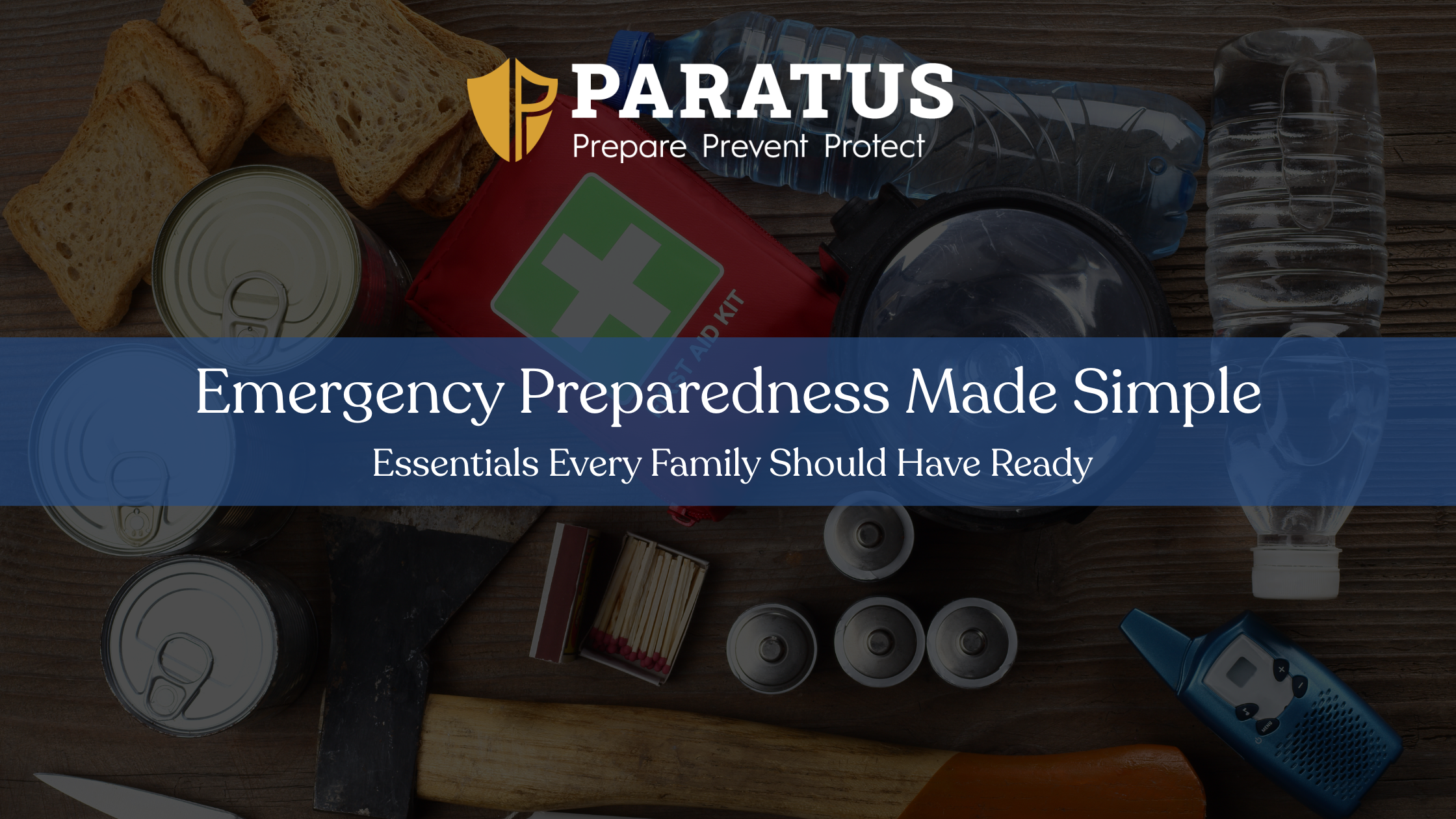
tHE FIRST ESSENTIALS: fOOD AND WATER
If services are disrupted, grocery stores won’t restock overnight. Start with:
At least 7 days of non-perishable food that your family will actually eat.
(canned goods, protein bars, peanut butter, pasta, shelf-stable milk, etc.)3 to 5 gallons of water per person, per day (for drinking, cooking, and sanitation).
Baby formula, pet food, or any specialty items your household needs.
This isn’t hoarding. It’s just smart, rotating inventory.
Cooking Sources
Don’t forget, if the power goes out, your ability to cook may be limited.
Make sure you have:
A small propane camp stove or portable gas cooker with extra fuel.
A backup cooking option such as a small charcoal or wood-burning stove or grill.
A reliable fire starter (waterproof matches, lighters, or ferro rods.
Even simple meals require heat. Having multiple safe ways to boil water or cook food adds flexibility and peace of mind.
Light and Power: Staying Functional in the Dark
Power outages are often the first domino to fall. Be ready with:
Battery-powered or hand-crank flashlights (avoid candles).
Solar-powered chargers.
Portable phone chargers and power banks.
Spare batteries.
Solar-powered lanterns.
First aid: Ready for both minor and serious injuries
A basic first aid kit isn’t enough. Every household should have a Tactical IFAK (Individual First Aid Kit) with:
Tourniquet, chest seals, wound packing materials, hemostatic gauze, nasal airway (NPA), pressure bandages.
Antiseptics, gloves, tweezers, over-the-counter medications, and pain relievers.
Extra prescription medications.
Basic training on how to use every component in your kit (take a tactical first aid and CPR course).
Important Documents and Cash
Keep these items accessible:
Printed copies of IDs, insurance policies, medical records, and emergency contacts.
Reasonable amount of cash (ATMs may not work during grid failures).
Backup written contact lists in case phones or devices fail.
If things truly break down, cash may lose value. Food, fuel, water, and skills will matter most.
Communication and Planning
Have a plan ready if communication systems fail:
A family meeting location if cell networks go down.
An emergency contact outside your immediate area.
A weather radio or emergency alert system.
Backup communication devices that don’t rely on cellular networks.
Mindset: Think Beyond Supplies
Preparedness isn’t just about what you have. It’s about how you think.
Are you ready to defend your home, your family, and your resources if necessary?
Are you thinking through scenarios where unprepared neighbors or strangers might seek your supplies?
Will you help others who need it? Will you be ready to lead?
This is why preparing with your neighbors and community is just as important as preparing your own home.
You cannot afford to prepare in isolation.
Preparedness isn’t about fear. It’s about giving yourself margin—a buffer between you and panic. When you’ve handled the basics, you’re calmer under pressure. You make better decisions. You don’t freeze when others panic. Situational awareness starts long before the crisis. The Paratus 3P Process helps you build the habits, skills, and mindset to recognize threats early and act decisively—whether the risk is global, local, or right at your front door.
The world may feel unstable. Your preparedness doesn’t have to be.
Start small. Start simple. But start now.
Because hoping someone else will save you isn’t a plan.
Learn more about building your family’s preparedness mindset with the Paratus 3P Process.
Click Here To Learn More
From vulnerable to vigilant
This blog highlights the critical need for situational awareness in today’s unpredictable world and shares a real-life testimonial from a Paratus client who transformed their family’s safety mindset through the Take Back Responsibility Program. It explores how awareness—not just locks and cameras—is the most effective defense, and encourages readers to take control of their personal and family safety by embracing the Paratus 3P Process: Prepare, Prevent, Protect.
Why Situational Awareness is the Skill Everyone Needs in Today’s World:
Life doesn’t give warnings. Emergencies rarely announce themselves. From disturbing headlines about violence in schools, attempted abductions, to threats at workplaces, there’s a rising need for more than just hope or luck. There’s a need for preparation.
That’s where situational awareness comes in—not as a buzzword, but as a life skill. One that empowers you to move from feeling vulnerable to being confidently vigilant.
Why Situational Awareness Matters
Many families rely on doorbell cameras, alarm systems, or self-defense gadgets to feel safe. While those tools are helpful, they don’t replace the most powerful defense we have: awareness.
Situational awareness is about being mentally prepared, knowing how to spot trouble before it happens, and being confident enough to act. It isn’t fear-based—it’s about staying present and proactive in the world around you.
A Real Story from a Paratus Client
"Before I found Paratus, I thought our home was secure. We had cameras, alarms, and deadbolts. But one afternoon, a burglary happened on our street—just three houses down. The footage showed the suspect walking casually up to the home, checking doors until he found one unlocked. It shook me. I realized how easily it could’ve been us—and how unprepared we really were."
"That’s when I enrolled in the Paratus Take Back Responsibility Program. It completely changed our approach to safety. We didn’t just install things—we practiced awareness at home and everywhere we went. My kids learned how to spot exits when we go shopping. My spouse and I have a plan for emergencies. We lock our doors, but more importantly, we live alert. I sleep better at night knowing we’re not easy targets anymore."
— Jenna M., Texas
Paratus 3P: Beyond Locks and Cameras
What sets Paratus apart is the 3P Process: Prepare, Prevent, Protect.
It’s more than a theory—it’s a daily mindset that helps you build habits that actually keep your family safer.
Through the Take Back Responsibility Program, families and individuals learn how to:
Be aware of their surroundings in everyday environments.
Teach kids safe habits without fear.
Spot red flags and prevent danger before it unfolds.
Respond confidently in high-stress situations.
This program isn’t just about emergencies. It’s about peace of mind in parking lots, school drop-off lines, grocery stores, and walks through the neighborhood. It’s about empowering your family to live with confidence, not fear.
You won’t find that in an app or a gadget—it comes from training, practice, and mindset.
Your Next Step: Take Back Responsibility
We believe safety isn’t something you outsource. It’s something you practice. With Paratus, you’ll get more than tips—you’ll develop a lifestyle of awareness, confidence, and readiness.
If you’re ready to move from vulnerable to vigilant, to teach your family how to stay safe in any situation, and to gain the tools that make a real difference—this is your moment.
Join the thousands of families already transforming the way they live.
👉 Enroll in the Take Back Responsibility Program today and start building the confidence, skills, and habits that will protect what matters most.
The case for breaking away from traditional training
In 2025, businesses can no longer afford to settle for traditional training methods that are reactive and generalized. To truly solve problems and ensure the safety of employees, it’s time to make a fundamental shift toward a proactive, tailored approach.
That’s where Paratus 3P comes in.
Here’s why this shift is essential for businesses:
1. Customization Drives Effectiveness
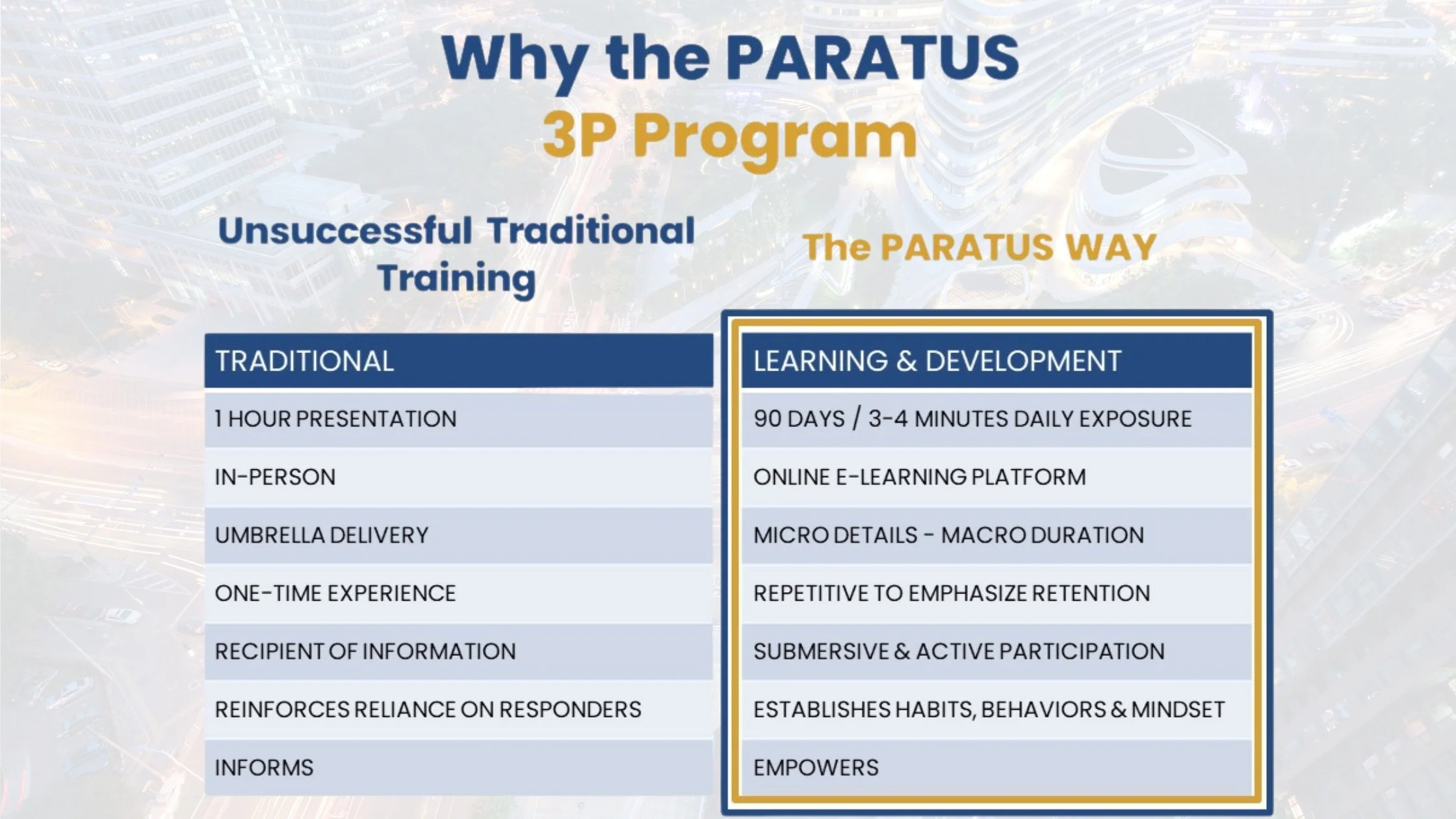
Traditional training often feels like a one-size-fits-all solution, failing to address the unique needs of different teams, roles, or industries. Paratus 3P tailors training content to fit the specific needs of each team, role, and situation. Whether it's a frontline worker or a supervisor, Paratus 3P ensures employees are equipped with the skills and knowledge that directly apply to their daily tasks and challenges. This personalized approach empowers employees to act decisively and effectively when problems arise.
2. Active Engagement = Better Retention
In traditional training, employees are often passive recipients of information, which leads to disengagement and poor retention. Paratus 3P flips this model by engaging employees in real-time decision-making and problem-solving. This interactive, hands-on approach reinforces knowledge retention and ensures employees are not just learning but also practicing and applying what they’ve learned in real-world contexts.
3. Continuous Improvement for Real-Time Solutions
Traditional training typically focuses on one-off sessions, often leaving employees to fend for themselves once the training is over. Paratus 3P, on the other hand, integrates learning into daily operations, creating a culture of continuous improvement. With layered safety briefings and after-action reviews, employees constantly learn and adapt to solve problems as they emerge. This continuous feedback loop ensures issues are addressed in real time, preventing them from escalating.
4. Proactive Problem-Solving
While traditional training may address issues after they happen, Paratus 3P ensures employees are always prepared. Through proactive strategies, teams are trained to identify and solve problems before they escalate. By instilling situational awareness at every level—group, foreman, and team lead—employees are equipped to handle unexpected challenges and mitigate risks, making them not just reactive, but prepared.
The 2025 Imperative:
As we head into 2025, businesses must move away from outdated, generic training methods and embrace a more effective, proactive approach. Paratus 3P offers the solution—creating a workforce that is not only equipped to handle known challenges but is also prepared for the unexpected. Businesses can foster a culture of safety, preparedness, and adaptability by focusing on real-time problem-solving, tailored training, and continuous learning. Now is the time to solve the problems that traditional training has left unresolved. Paratus 3P is the solution businesses need to make 2025 the year they build a truly prepared workforce.
Join the growing list of companies that are taking the safety of their team members seriously in 2025.
Contact us today.