
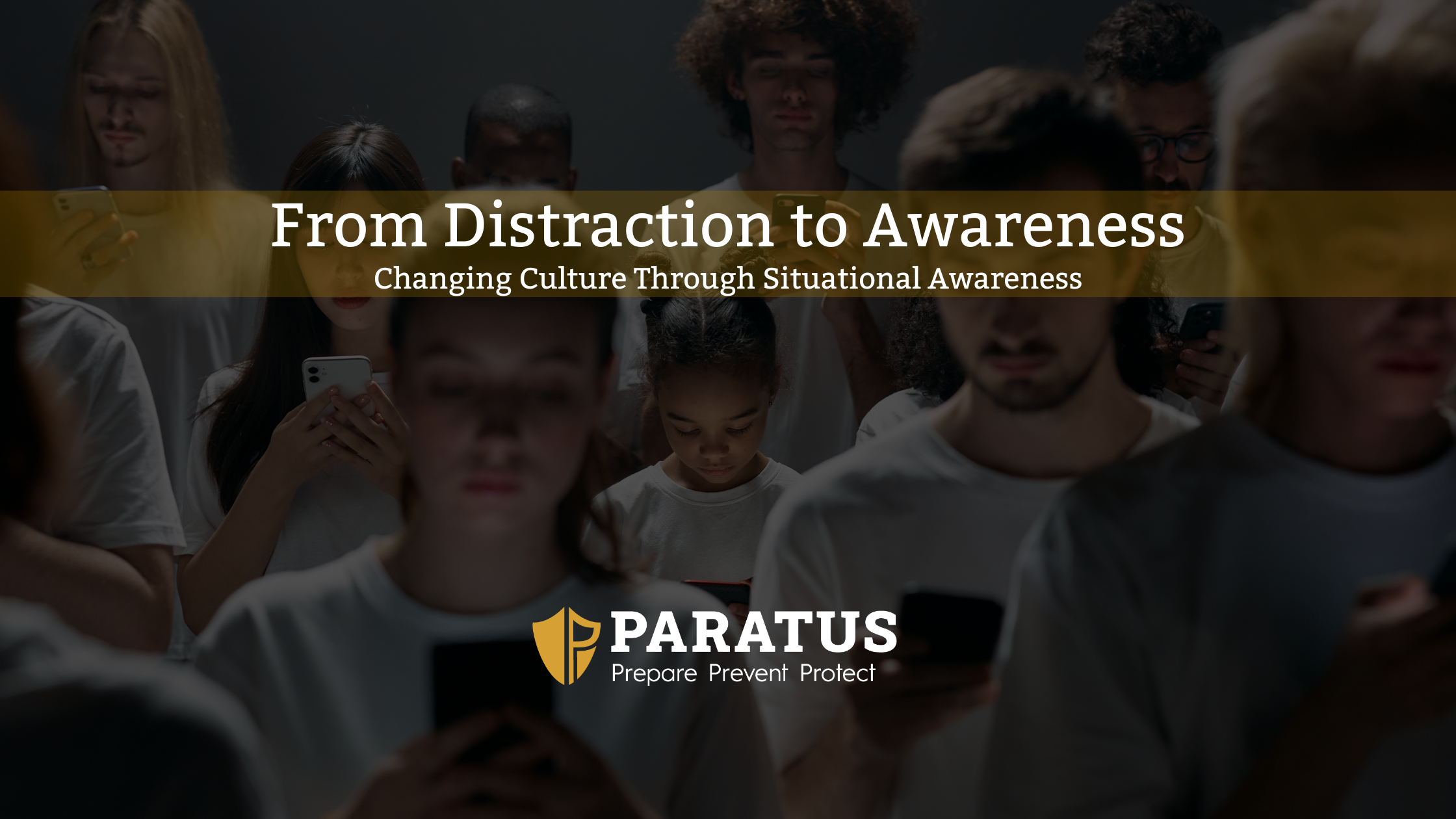
From Distraction to awareness
Our culture is distracted and disconnected. Learn how situational awareness training can shift society from isolation to responsibility and safety.
Walk into almost any public space today - an airport, a coffee shop, a train car, a restaurant, or a grocery store, and you’ll see the same picture: heads down, eyes glued to phones, earbuds in, people moving through life in their own little bubble.
On the surface, this looks harmless.
But beneath it lies a dangerous cultural shift: a society that is disconnected, distracted, and unprepared to protect itself or one another.
The Truth About Our Current Culture
We live in a time when danger doesn’t always announce itself loudly. Threats often begin quietly, in body language, in conversations, in online posts. But too often, we miss them because we aren’t paying attention.
This isn’t just about individual safety. It’s about the erosion of collective responsibility. When everyone keeps to themselves, when people convince themselves “someone else will act,” tragedies escalate. This is the bystander effect playing out in real time, over and over again.
What Needs to Change
We can’t fix cultural distraction with another policy, committee, or task force. Those approaches are reactive, top-down, and slow. What we need is a cultural shift - one that starts with people taking back responsibility in their daily lives.
Imagine a culture where:
Parents teach their kids not just to be careful, but also how to notice warning signs.
Commuters on a subway car look up, notice distress, and take action before it’s too late.
Neighbors check in on one another, not just after tragedy, but before.
That’s the kind of world Paratus is working to build.
The Paratus Approach
At Paratus, we believe the solution is simple, but powerful: train people to be more aware, more in tune, and more confident to act.
Through our 3P Process—Prepare, Prevent, Protect—we equip families, schools, businesses, and communities with skills that build habits, not just knowledge. Our programs are designed to:
✔ Develop daily situational awareness skills
✔ Teach the 10 Critical Skills of safety and responsibility
✔ Empower people to act as their own first responder when it matters most
✔ Shift from isolated, reactive thinking toa connected, proactive culture
This is not about paranoia. It’s about empowerment. It’s about love for our families, communities, and one another.
Our Hope for the Future
We know the cultural climate won’t change overnight. But every time a parent practices awareness with their child, every time an employee notices a risk at work, every time a community member decides not to look away - we move one step closer to a safer world.
This is the mission of Paratus: to break free from distraction and isolation, and to replace them with awareness, responsibility, and courage.
Because the truth is, culture doesn’t just happen. We create it.
And together, we can create one where everyone is safer, stronger, and more connected.
Ready to Take Back Responsibility?
Learn how the Paratus program can empower you, your family, or your organization: www.paratus.group/takebackresponsibility
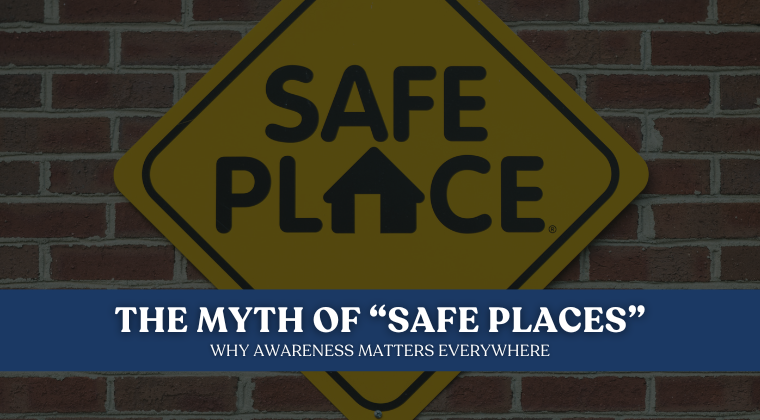
The Myth of “Safe Places”: Why awareness matters everywhere
From schools to subways, recent tragedies show no place is guaranteed safe. Learn why situational awareness is the daily habit that protects us all.
When you think of a “safe place,” what comes to mind?
Maybe it’s your child’s school. Your neighborhood grocery store. Your favorite gym. A church pew.
These are spaces where we feel comfortable…where routine and familiarity trick us into believing danger can’t touch us.
But the truth is this: there are no guarantees.
The Problem With “It Won’t Happen Here”
Tragedy often strikes in the places we least expect it: a Catholic school in Minneapolis, a park in Stamford, a nightclub in Brooklyn, a subway train in Charlotte.
These places were filled with ordinary people going about their lives. And yet, danger walked in.
When we buy into the myth of “safe places,” we let our guard down. We get distracted. We stop noticing who’s around us or what’s happening nearby. That false sense of security makes us more vulnerable…not less.
Everyday Spaces, Everyday Risks
Most people don’t expect violence or emergencies in everyday spaces. But consider:
Schools & Campuses: Since 2018, the U.S. has averaged at least one school shooting per week.
Workplaces: Nearly 2 million Americans experience workplace violence every year.
Public Transit: Whether theft, harassment, or assaults, transit systems see incidents daily across major cities.
Neighborhoods: Carjackings, burglaries, and even opportunistic crimes happen where people feel “most comfortable.”
The lesson? Location alone doesn’t make you safe. Habits do.
Awareness as a Daily Practice
Situational awareness doesn’t mean living in fear. It means living prepared.
Here are three ways to carry awareness into every space:
1️⃣ Notice people, not just places. Look at body language, not just scenery.
2️⃣ Limit distractions. Eyes up, phone down, especially in transitional spaces like parking lots.
3️⃣ Know your options. In every room or setting, identify exits or safe routes.
These small habits, practiced daily, stack into confidence. Instead of worrying “what if,” you already know what to do.
Collective Responsibility in “Safe Places”
Awareness is contagious. When one person looks up, pays attention, and takes responsibility, it signals to others to do the same.
Parents model awareness to kids, teachers create cultures of safety in classrooms, employees watch out for coworkers, and communities where people care enough to notice and act.
That’s how “safe places” become safer: not by assuming security, but by sharing responsibility.
The Paratus Mission
At Paratus, we challenge the myth of safe places because we know safety is not a guarantee—it’s a mindset.
Our Take Back Responsibility program equips families, schools, businesses, and communities with the skills to:
Prepare for the unexpected,
Prevent risks from escalating,
Protect themselves and those around them.
Because safety doesn’t live in buildings, policies, or routines, it lives in people who are ready, aware, and willing to take responsibility.
Don’t settle for the myth of safe places. Build the habits that make safety real.
Learn more and join the mission: https://www.paratus.group/takebackresponsibility
Collective Responsibility: Why Awareness Is Everyone’s Job
Most tragedies show warning signs before they happen. Learn how collective responsibility and situational awareness can protect families and communities.
When tragedy strikes…whether it’s a school shooting, a workplace attack, or violence in a public space, we almost always hear the same heartbreaking question:
“Why didn’t anyone see this coming?”
The painful truth is, in most cases, there were signs.
The recent Minneapolis Catholic school shooting is one more devastating reminder. Before opening fire, the attacker posted online about his intentions. Again and again, across different tragedies, we’ve seen the same pattern: warning signs show up in conversations, troubling behaviors, or digital footprints.
And too often, those signs are ignored, dismissed, or left for “someone else” to handle.
Why Collective Responsibility Matters
Safety is not just the job of law enforcement or school administrators. It belongs to all of us.
Parents who notice sudden changes in their child’s behavior.
Friends who hear concerning statements.
Coworkers who see unusual or alarming actions.
Community members who sense something is “off.”
Every person has the potential to recognize danger before it escalates. But recognition alone is not enough—we also need the confidence and skills to act.
That’s what collective responsibility is: a shared commitment to notice, to speak up, and to step in before it’s too late.
The Role of Situational Awareness
Situational awareness isn’t just about what you do in the middle of an emergency. It’s about the habits you practice every day that make you capable of preventing one.
With training, people can learn to:
✔ Spot small changes in behavior or environment
✔ Trust instincts when something feels wrong
✔ Decide when to intervene, speak up, or seek help
When awareness is practiced at every level - families, schools, workplaces, and communities - it creates a safety net. Everyone contributes, and the burden doesn’t fall on just a few.
Turning Awareness Into Action
Collective responsibility becomes real when it is put into practice:
Families can prepare their kids with awareness habits so they’re not blindsided when they’re out of sight.
Businesses can train employees to notice early risks, protecting both people and operations.
Schools can integrate awareness into daily culture so that students and staff alike understand the signs and know what to do.
When people act together, prevention becomes possible. And prevention means fewer headlines, fewer vigils, and fewer families grieving loved ones who should still be here.
The Paratus Mission
This is why Paratus exists.
Our Take Back Responsibility program equips individuals, families, schools, and businesses with the mindsets and tools to make awareness a daily habit.
Because when we share responsibility, we share safety.
And when we practice awareness, we prevent tragedy.
Don’t wait until it’s too late.
Join us in building a culture of collective responsibility.