

Cooper’s color code: A simple way to stay aware every day.
Cooper’s Color Code is a simple system that helps you recognize and adjust your awareness in everyday situations. Learn how to apply it at home, at work, or on the go, and how it fits into the Paratus 3P Process for real-world readiness.
We’ve all had those moments…a gut feeling, a quick glance over the shoulder, a pause before stepping into an unfamiliar space.
That’s your awareness at work. But what if you could train that awareness intentionally? What if you had a simple way to understand what level of alertness you're operating in and how to adjust it as your environment changes?
That’s exactly what Colonel Jeff Cooper’s Color Code is designed to help with. Originally used in firearm safety and self-defense circles, the color code is much more than a tactical tool. It’s a mindset model—a simple, visual way to think about how present, prepared, or distracted you are in any situation. And yes, it’s just as applicable walking through a parking lot as it is in a high-risk environment.
Let’s break it down.
⚪️ Condition White: Unaware
This is your default mode when you’re relaxed, distracted, and not paying attention to your surroundings.
You might be:
Scrolling on your phone
Daydreaming
Zoned out in a familiar space
Wearing both earbuds while walking
In Condition White, you’re not mentally prepared to notice something unexpected, which makes it harder to respond if something does go wrong. There’s a time and place for White—but it shouldn’t be your default in public spaces.
🟡 Condition Yellow: Relaxed Alert
This is where we aim to live most of the time.
In Yellow, you’re calm and confident—but you’re also observing. You’re scanning your surroundings, casually noting what’s going on, and aware of any subtle shifts in energy or movement.
Examples:
Noticing who enters a coffee shop
Walking through a parking lot with your keys ready
Checking for exits when you enter a new room
You’re not anxious. You’re just engaged with your environment. This is the core of everyday situational awareness, and it’s where most prepared people stay by choice.
🟠 Condition Orange: Focused Attention
In Orange, something has caught your attention. It doesn’t mean there’s a threat—but something feels off enough that you’ve shifted focus. You’re starting to assess.
Examples:
Someone is following you too closely
A person’s behavior suddenly shifts
A sound or movement triggers your instincts
In Orange, your mind is asking: “If this becomes a problem… what will I do?” This is where mental rehearsal begins.
🔴 Condition Red: Ready to Act
Condition Red means your gut check from Orange just turned into a decision.
This is the moment you prepare to act—whether that’s walking away, calling for help, confronting a situation, or physically defending yourself as a last resort. This level isn’t just about intensity, it’s about decisiveness.
Most importantly: You don’t need to live in Red. You just need to know how to get there if needed and without panic.
Why It Matters in Real Life
This color code isn’t just for law enforcement or military professionals.
It’s for:
Runners
Parents
Teens walking home from school
Travelers at a rest stop
Anyone who wants to be more prepared in everyday life
At Paratus, we teach this model inside our Situational Awareness Course because it gives people a simple, empowering way to check in with their mindset at any moment. And once you learn to operate in Yellow by default, you'll be amazed how quickly you start noticing things you used to overlook.
Here's How to Use It This Week:
✅ Practice checking your level when you walk into a new space
✅ Make Yellow your new default (calm, relaxed alertness)
✅ Teach your kids or loved ones the concept using age-appropriate language
✅ Journal one moment this week where you shifted levels, what triggered it? How did you respond?
Want to go deeper?
Our Situational Awareness Course at Paratus doesn’t just teach you what to watch for—it teaches you how to observe, decide, and act with purpose. The Cooper Color Code is just one part of the Paratus 3P Process—Prepare. Prevent. Protect. Whether you’re walking to your car or leading a team, the way you think under pressure matters.
Start training that mindset today.
🔗 Learn more and Enroll Here
Why Situational Awareness Is Your Best Self-Defense
Discover why situational awareness is your most powerful self-defense tool. Learn proactive safety strategies, preventive techniques, and essential skills through the Paratus 3P Process. Boost your confidence, mental resilience, and personal safety—empowering yourself to protect your family and community.
Safety is something we often don't think about until we’re forced to. In our unpredictable world, threats can emerge unexpectedly, from natural disasters and public emergencies to personal safety incidents. The best defense against such threats isn't necessarily strength or speed—it's something far simpler yet profoundly impactful: situational awareness.
What Exactly Is Situational Awareness?
Situational awareness is the skill of actively observing, understanding, and assessing your surroundings at all times. It involves recognizing potential risks and threats early, giving you the critical advantage of time to avoid danger or respond decisively if necessary.
At Paratus Group, we define situational awareness as the continuous process of identifying, assessing, predicting, deciding, and acting. Through dedicated training and practice, this process becomes an instinctual habit.
Why is Situational Awareness Critical?
The essence of situational awareness lies in its preventive power. Unlike reactive measures—which are essential but secondary—situational awareness focuses on proactive prevention. As the Paratus Group emphasizes through its proven 3P Process (Prepare, Prevent, Protect), preparation helps you avoid victimization, reduces anxiety, and significantly improves your mental health and confidence in daily life.
Imagine yourself walking to your car late at night. A situationally aware individual notices potential risks—a poorly lit area, an unfamiliar individual lingering nearby—and can take immediate preventive action. This heightened sense of awareness dramatically decreases your vulnerability and enhances your overall personal safety.
Real-World Examples & Testimonials
Participants in Paratus Group’s training have shared powerful stories about how their newfound situational awareness helped them avoid potentially dangerous situations:
A mother who quickly noticed suspicious behavior at a public park and moved her children safely away, avoiding an incident.
A business executive who recognized phishing scams and cybersecurity threats, safeguarding his company from substantial data loss.
College students who successfully diffused escalating situations by being aware of their surroundings and intervening appropriately early.
These testimonials underscore the effectiveness of situational awareness training in real-world settings.
Psychological Benefits of Situational Awareness
Situational awareness doesn't just protect you physically—it also significantly benefits your mental well-being. Preparedness reduces stress and anxiety, allowing you to live confidently without constant worry. At Paratus Group, we understand that worry is not the same as preparation; the latter empowers you, transforming your outlook from fear to confidence.
How to Enhance Your Situational Awareness
Improving your situational awareness involves regular, intentional practice of the following habits:
Stay observant: Regularly scan your environment, noting anything unusual.
Trust your instincts: If something feels off, respond immediately.
Minimize distractions: Particularly in public settings, reduce focus on phones or other devices.
Take proactive steps: Move toward safer locations, communicate your plans with trusted contacts, and avoid potential threats early.
Join the Paratus Movement
At Paratus Group, we equip you with critical skills through our specialized, continuous training model. Our unique Paratus 3P Process—Prepare, Prevent, Protect—helps embed situational awareness deeply into your daily habits, behaviors, and mindset.
Empower yourself today. Become your first responder. Enroll in our training course to learn more and enhance your ability to keep yourself, your family, and your community safe.
Situational awareness isn’t just a skill—it’s your best self-defense.
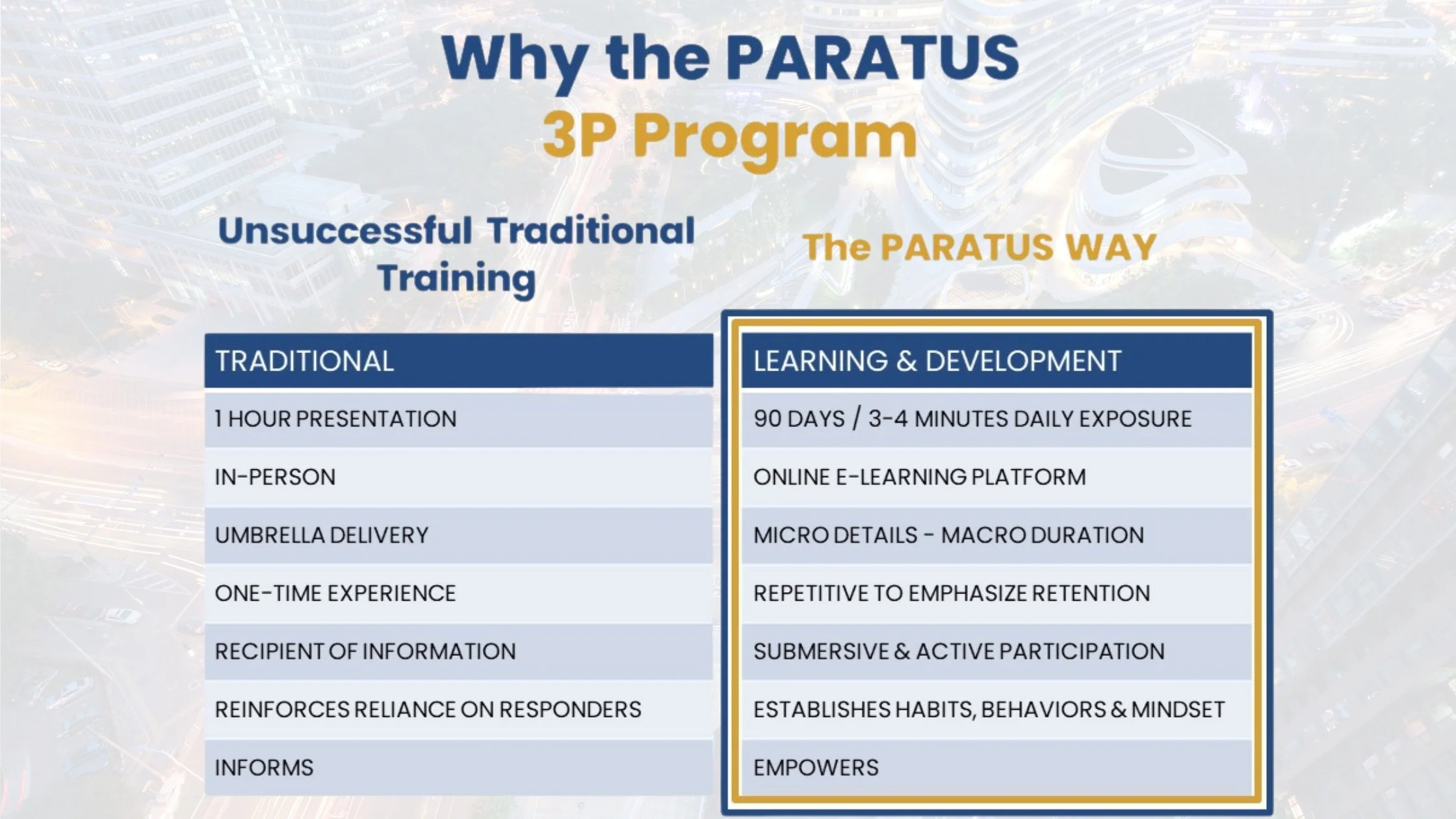
The case for breaking away from traditional training
In 2025, businesses can no longer afford to settle for traditional training methods that are reactive and generalized. To truly solve problems and ensure the safety of employees, it’s time to make a fundamental shift toward a proactive, tailored approach.
That’s where Paratus 3P comes in.
Here’s why this shift is essential for businesses:
1. Customization Drives Effectiveness
Traditional training often feels like a one-size-fits-all solution, failing to address the unique needs of different teams, roles, or industries. Paratus 3P tailors training content to fit the specific needs of each team, role, and situation. Whether it's a frontline worker or a supervisor, Paratus 3P ensures employees are equipped with the skills and knowledge that directly apply to their daily tasks and challenges. This personalized approach empowers employees to act decisively and effectively when problems arise.
2. Active Engagement = Better Retention
In traditional training, employees are often passive recipients of information, which leads to disengagement and poor retention. Paratus 3P flips this model by engaging employees in real-time decision-making and problem-solving. This interactive, hands-on approach reinforces knowledge retention and ensures employees are not just learning but also practicing and applying what they’ve learned in real-world contexts.
3. Continuous Improvement for Real-Time Solutions
Traditional training typically focuses on one-off sessions, often leaving employees to fend for themselves once the training is over. Paratus 3P, on the other hand, integrates learning into daily operations, creating a culture of continuous improvement. With layered safety briefings and after-action reviews, employees constantly learn and adapt to solve problems as they emerge. This continuous feedback loop ensures issues are addressed in real time, preventing them from escalating.
4. Proactive Problem-Solving
While traditional training may address issues after they happen, Paratus 3P ensures employees are always prepared. Through proactive strategies, teams are trained to identify and solve problems before they escalate. By instilling situational awareness at every level—group, foreman, and team lead—employees are equipped to handle unexpected challenges and mitigate risks, making them not just reactive, but prepared.
The 2025 Imperative:
As we head into 2025, businesses must move away from outdated, generic training methods and embrace a more effective, proactive approach. Paratus 3P offers the solution—creating a workforce that is not only equipped to handle known challenges but is also prepared for the unexpected. Businesses can foster a culture of safety, preparedness, and adaptability by focusing on real-time problem-solving, tailored training, and continuous learning. Now is the time to solve the problems that traditional training has left unresolved. Paratus 3P is the solution businesses need to make 2025 the year they build a truly prepared workforce.
Join the growing list of companies that are taking the safety of their team members seriously in 2025.
Contact us today.
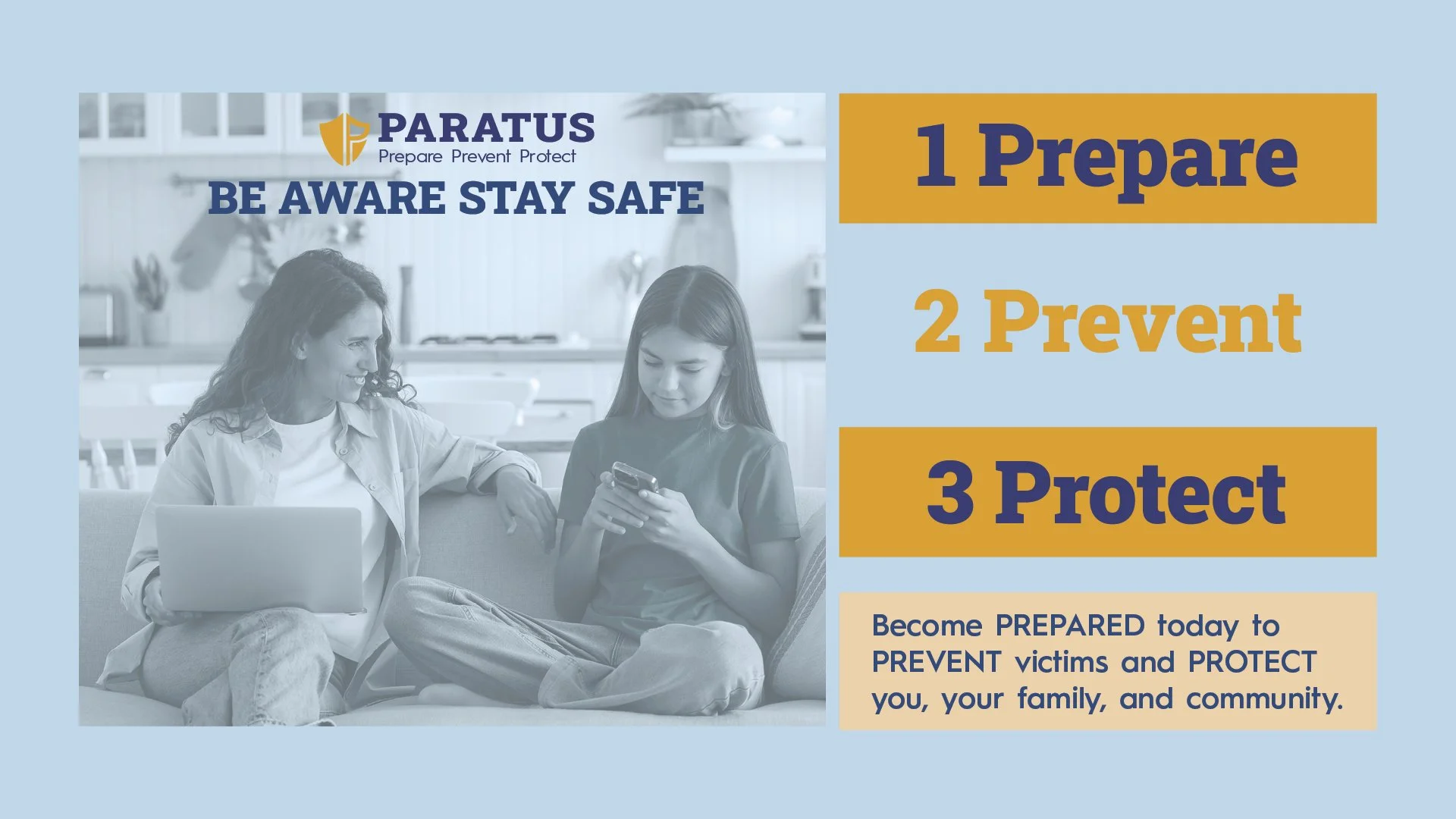
Paratus 3P Explained: Prepare, Prevent, Protect
Discover the Paratus 3P Process — Prepare, Prevent, Protect — a proven safety training method that boosts situational awareness, prevents threats, and empowers individuals with real-world preparedness and defense skills.
In today's unpredictable world, ensuring personal and community safety is more crucial than ever. The Paratus Group has developed the 3P Process: Prepare, Prevent, Protect, a comprehensive situational awareness training methodology designed to equip individuals with the skills needed to navigate and respond to potential threats effectively.
Understanding the Paratus 3P Process
The 3P Process is structured around three foundational pillars:
1. Prepare
Preparation involves cultivating situational awareness to recognize potential threats and environmental cues. Through tailored training scenarios and mental exercises, participants develop a proactive mindset that prioritizes safety in daily life. This phase emphasizes developing 10 critical skills essential for effective situational awareness.
“I have increased my situational awareness to a much higher degree. I am now considering strategies, resources, and potential threats when entering a new environment.”
— A. Beckman
2. Prevent
With preparation comes the ability to prevent incidents before they escalate. This phase focuses on de-escalation techniques, recognizing behavioral changes, and employing verbal tactics to defuse conflicts. Individuals can take proactive steps to avoid hazardous situations by understanding and anticipating potential dangers.
“Brian is extremely knowledgeable and thorough. Love how he engages with his students. Definitely an eye opener for me! I am now well aware of my surroundings after taking this course.”
— M. King
3. Protect
When prevention is not possible, the focus shifts to protection. This phase equips participants with practical skills for personal defense, escape techniques, and strategies to safeguard others during high-risk situations. The training is grounded in real-world applications, ensuring individuals are prepared to respond effectively when necessary.
“Brian is an amazing speaker. His talk on Safety and Situational Awareness has never been more timely. He's the type of speaker who engages his audience from the minute he takes the stage and leaves them ready for action!”
— J. Crilley
The Effectiveness of the 3P Process
The 3P Process offers more than just physical safety techniques; it fosters psychological readiness:
Builds Confidence: Having a structured plan alleviates fear and anxiety.
Enhances Mental Resilience: Training under stress conditions helps individuals remain composed during emergencies.
Improves Decision-Making: Practicing scenarios in advance enables swift and effective responses.
Strengthens Community Safety: Widespread training amplifies collective security and preparedness.
Real-World Impact
The Paratus Group has successfully trained diverse groups, including educators, corporate teams, and community leaders. Participants consistently report heightened awareness, improved confidence, and a greater sense of security in their environments.
Empower Yourself with Preparedness
Safety is not a matter of chance; it results from deliberate preparation and proactive behavior. The 3P Process: Prepare, Prevent, Protect is designed for everyone, providing the tools and knowledge necessary to navigate the complexities of today's world confidently.
Take the first step towards enhanced personal and community safety.
👉 Explore our situational awareness programs and experience the transformative impact of the 3P Process firsthand.
With Paratus Group, you're not just reacting to the world—you’re prepared for it.
For more information and to read additional testimonials, visit Paratus Group official website.